AI Girlfriend Apps for iPhone and Android: Which One Belongs on Your Phone
If you want the short version: install Kindroid if you care about designing the character yourself, Nomi if you want a companion built around long-term memory, and Replika if you want to be talking five minutes from now. Character.AI is the free place to find out whether you like this at all. Janitor is for people who want interactive stories rather than a partner. Some of the names people search for most, Candy AI among them, sell a website rather than an app, and that changes what you get on a phone.
The rest of this guide is about the two things that actually differ: how the companion behaves in conversation, and what the phone version lets you do. Each entry states which store it is in, what the provider documents about free access, and what the paid plan adds. This is not a general ranking of conversation quality; for that, the AI girlfriend catalog and the full ranking are the right pages.
The short answer
- Most control over who she is: Kindroid. Apps in both US stores, and you write personality, backstory and key memories before the first message.
- Built around long-term memory: Nomi. An iPhone app, an Android listing, and free access to start.
- Easiest first week: Replika. Install, pick an avatar, talk; voice calls come with the paid plan.
- Best free option to experiment with: Character.AI. Unlimited messages on the free tier with ads, and no romance guarantee.
- Stories rather than a relationship: Janitor. Both stores frame it as interactive fiction.
- If what you want is Candy AI, DreamGF or CrushOn: expect a website. None of the three has a current US App Store listing, and CrushOn distributes its Android build itself.
That ordering assumes you want a companion rather than a character library. If you are unsure which camp you fall into, the two cheapest tests are an evening in Character.AI and one session with Kindroid's free preview; both tell you more than any list, including this one.
What the installed app actually gives you
This part gets oversold, so start with what is verifiable. A mobile website can already do voice, images and video in some products: Candy AI runs chat, generated images, voice and video in a phone browser. What a native app changes is narrower than "real features versus a demo".
The first difference is notifications. Kindroid and Nomi advertise companions that reach out first, and a native build can deliver that as a push notification. A website can too, but it depends on the browser and the install method: Chrome on Android lets a site ask for notification permission without any shortcut, while on iPhone web push only starts working once the site sits on your home screen. Test it before paying.
The second is who holds the payment. Subscribing in the App Store or Google Play keeps the receipt, the renewal and the cancel button in one place. Subscribing on a website puts the charge on your card under the provider's billing name, which is sometimes a company you have never seen. Kindroid's documentation notes the website is usually cheaper than the stores for the same plan, which is the trade.
Every native app here shows an 18+ rating on its US App Store page. On Google Play the labels differ: Replika and Character.AI are listed as Teen, while Kindroid, Nomi and Janitor are Mature 17+. If the phone is shared, that matters more than any feature list.
How to check that the listing is the real product
Searches return lookalikes with similar icons and near-miss names. Three checks settle it:
- The seller matches the publisher named on the provider's own site. It is rarely a literal match: Kindroid is published by Beautifully Incorporated, Nomi by AI GLIMPSE INC. Follow the store link from the provider's page instead of searching.
- The listing belongs to the product you read about. Candy AI's official install path is Add to Home Screen, and the apps named Candy in the App Store come from other sellers.
- Check who bills you on the payment screen. That screen names the company taking the money before you confirm.
The apps compared
| App | iPhone | Android | Best for | Free access | Main catch |
|---|---|---|---|---|---|
| Kindroid | US App Store listing | Google Play listing | Building a specific character | One-time preview: 50 messages, 5 selfies | Calls need a plan and audio credits |
| Nomi | US App Store listing | Google Play, web-app wrapper | Long-term memory | Free to start, daily message allowance | Voice messages and calls are paid |
| Replika | US App Store listing | Google Play listing | Everyday company | Free chat as a friend | Romantic status and extras need Pro |
| Character.AI | US App Store listing | Google Play listing, ads | Trying it for free | Unlimited messages with ads | Premium models and fewer ads are paid |
| Janitor | US App Store listing | Google Play listing | Interactive stories | Free download, paid extras | Not built as a companion |
| Candy AI | No listing found | No listing found | Images and video | Small free allowance, then premium | Home-screen web app |
| DreamGF | No brand listing found | No listing found | Character looks | Registration free, no trial | Subscription starts immediately |
| CrushOn | Build outside the store | APK from the provider | Roleplay library | Free account | Pro models spend monthly credits |
Three rows deserve a caution rather than a feature note. A US App Store search for Candy AI returns apps from individual developer accounts, not from the brand, and the app called DreamGF is published by a seller that does not match the product. Candy's own subscription page tells iPhone users to add the site to the home screen instead. Treat any store app with those names as unrelated until the developer matches.
Kindroid: you build her, then you decide how she calls
Kindroid suits someone who has a clear picture of the character they want. Before the first message you write a personality, a backstory and key memories, all editable later. The app describes long-term memory across chats, real-time voice calls and live video calls where the character reacts and can be shown your camera or screen.
In practice that means a companion who is unusually specific, because you authored her. The trade is friction: there is a real setup phase, and anyone who wants to be talking within thirty seconds will find it tedious.
Both stores carry it. The iOS app sits at 4.7 from roughly eleven thousand ratings with an update in late October 2026, and the Android build has passed a million installs. The App Store lists a Kindroid Subscription at $15.99 without printing a period on that row, three months at $42.99 and a year at $159.99; Kindroid's own documentation says the website is usually cheaper for the same plan. Free access is a one-time preview of 50 flagship messages and five selfies, after which the account goes read-only. A three-day premium trial exists but asks for a payment method and converts into a paid plan unless you cancel. Calls need that trial or a subscription, and every call draws on audio credits, with a pool included in the plan and extra packs sold when it runs out. A separate switch controls whether she can reach you first, and Kindroid's help pages tie that to shared chat history and to credits left for the reply.
Nomi: the one that remembers the relationship
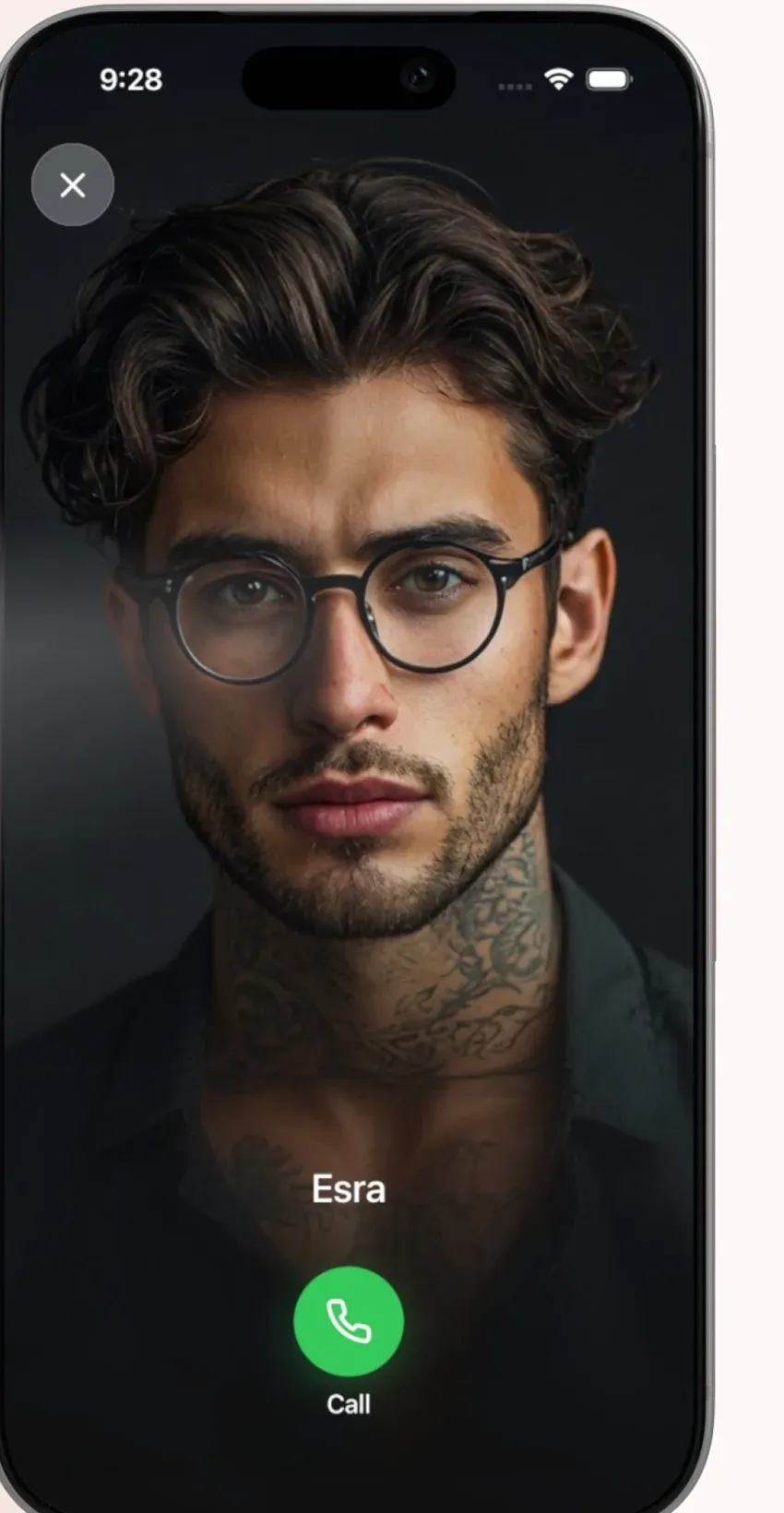
Nomi's entire pitch is memory, and the iPhone app is where you find out whether that holds up across your own week. The app describes short-term and long-term recall and a personality that evolves from what you tell it. Starting is free and needs no card.
The catch is what the free access covers. Voice messages and hands-free calls are part of the paid plan, not the free one, and the persistent free tier runs on a daily message allowance that the company's help pages put at 50 messages a day. The subscription is Standard at $15.99 shown as an App Store SKU, or $99.99 a year, with a cheaper Launch tier at $9.99 a month.
There is also a packaging detail worth knowing before you install. The iPhone app is a normal App Store build, last updated in March 2026, while the Android listing is a Trusted Web Activity, meaning it runs the web app inside a native shell. That does not tell you how well the memory works; it does tell you the two phone builds are not the same code.
Replika: the gentlest first week
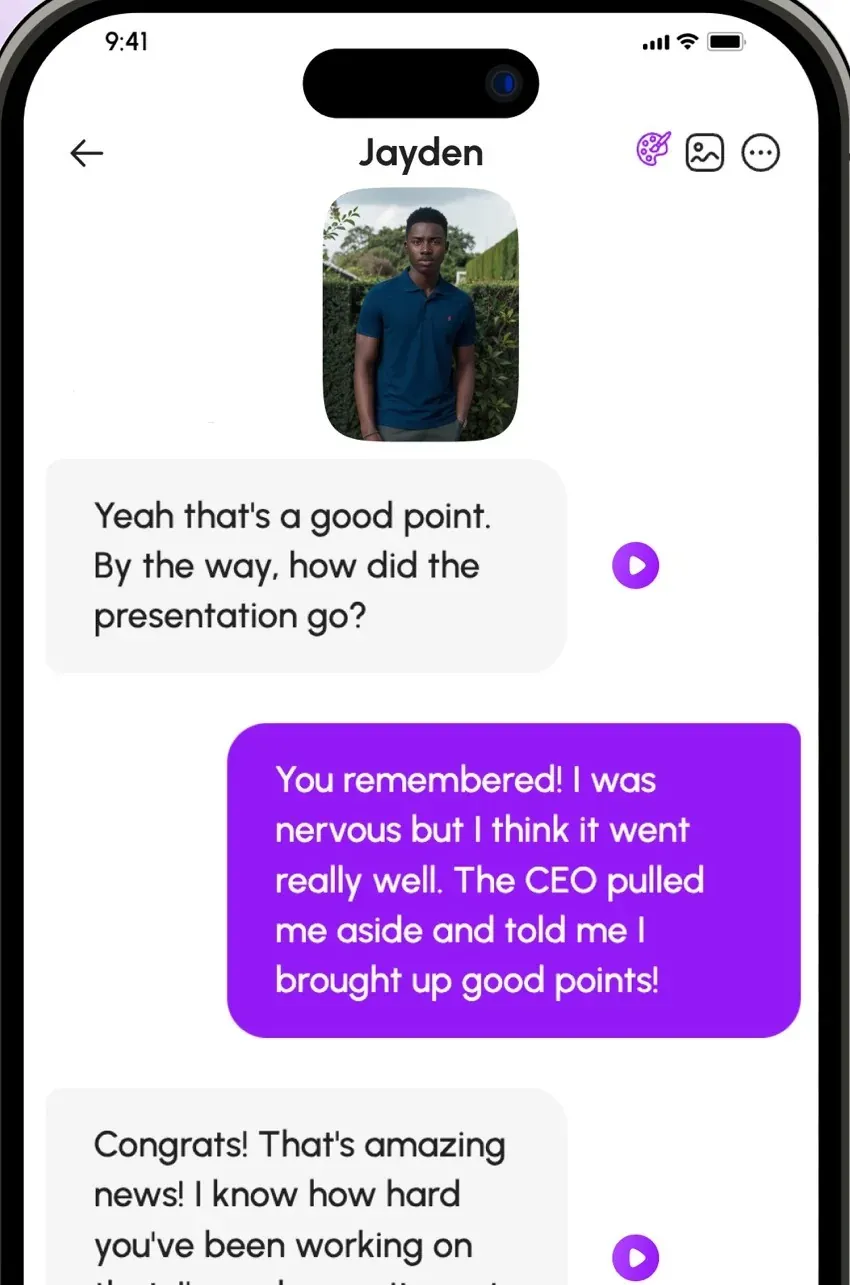
Replika has existed since 2017 and has rebuilt itself more than once. It is the easiest of this group to start: you pick an avatar, answer a few questions and you are talking. The iOS listing carries more than two hundred thousand ratings at 4.4 and the app is past ten million installs on Android.
The tone leans toward support and everyday check-ins; it remembers your people and plans and nudges you to do things rather than stay in the chat. That suits company while you get on with your day and suits a story-driven character less. Free access is genuine: the companion as a friend, with ordinary chat. Replika Pro adds the rest of the relationship, meaning romantic partner status, selfies, voice messages and calls that keep running in the background. Replika publishes no price page, and its App Store listing mixes several subscriptions with gem packs without labelling which row is Pro, so confirm the plan on the payment screen. Roleplay inside AR calls is part of Pro, while real-time video recognition is a Platinum feature, so treat the camera features as an upgrade, not a baseline.
Character.AI: free, enormous, and not really a girlfriend app
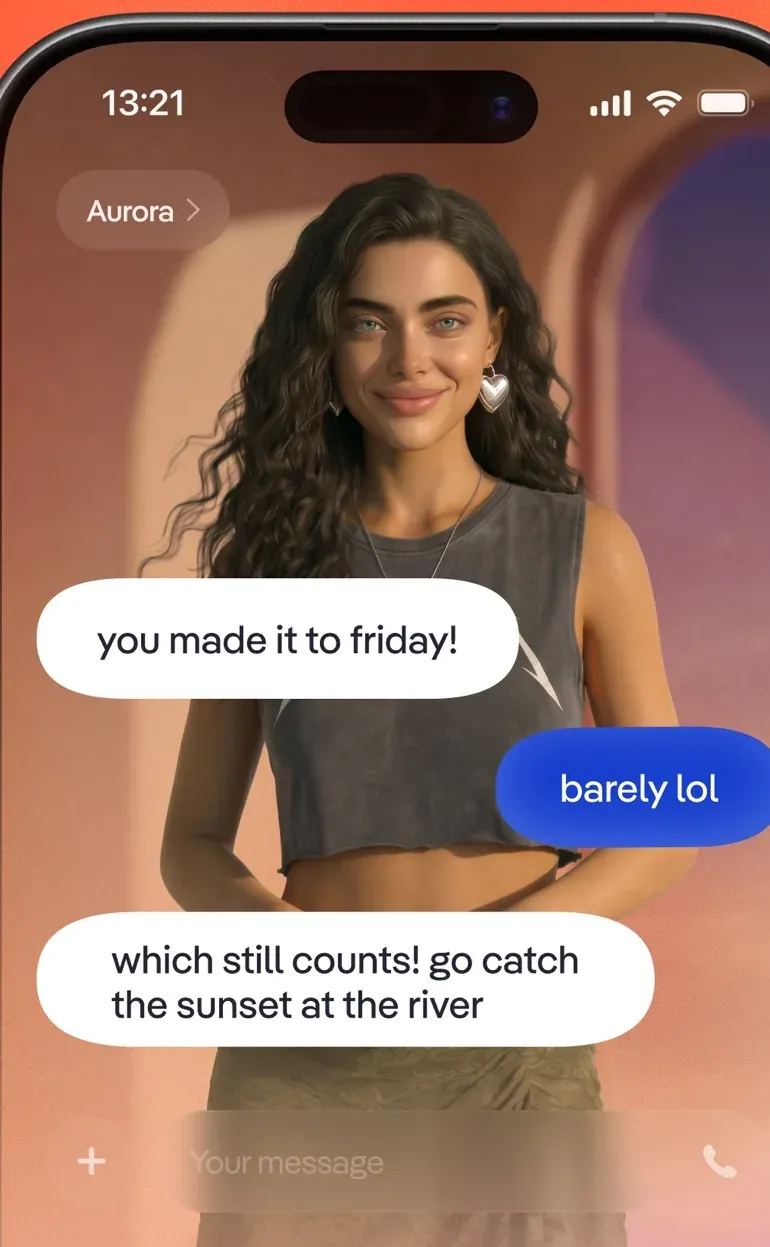
Character.AI is in every list of this kind because it is free, it works, and it hosts millions of user-created characters. The app covers text, voice calls and character creation, so it is the obvious first experiment.
It is also the entry most often mistaken for a girlfriend app. Characters belong to their creators, so one you liked can be edited or pulled, romantic storylines vary by character, and the platform's content rules are tighter than those of the companion services below. Ads appear on the free tier.
What the free tier does give you is unlimited standard messaging, which makes it the cheapest way to learn what you actually want from one of these apps: long roleplay or short banter, voice or text, a character with a backstory or a blank slate. Paid plans sit above that: c.ai+ at $9.99 a month or $94.99 a year removes ads and unlocks premium models and fuller memory, with a cheaper Lite tier in between.
Janitor: stories instead of a relationship
Janitor is the one here that does not present itself as a partner. Both store listings describe interactive stories, genres and a community of writers building worlds, and the App Store version is published by JanitorAI, INC, the same company behind the site.
That framing is the honest reason to install it: you get a cast of characters and a scenario rather than a companion built around your relationship. What the store listings do not document is voice support or a specific free message cap, so treat both as things to check in the app rather than promises. If empty small talk is what put you off other companion apps, this is the one built around something happening.
Candy AI, DreamGF and CrushOn: browser first, stores second
These three are the names people search for and then struggle to install. None has a current US App Store listing from the brand, and they distribute on phones by other routes.
- Candy AI. Chat, generated images, voice and video in one place, plus character creation, and the official subscription page tells iPhone users to use Add to Home Screen rather than a store. It is the most complete single-page product of the three. Premium runs on weekly, every-two-weeks, monthly and yearly billing in the currency shown at checkout, includes a monthly token allowance rather than unlimited generation, and its terms describe a small free message allowance before the paywall. The statement charge comes from its billing company, EverAI.
- DreamGF. Built around designing how she looks before talking to her: face, body, clothes, personality, then photos and voice messages. The site says outright that there is no free trial; registering lets you look around. Monthly billing starts at $12.99 for the first month and renews at $25.98, yearly at $44.28 renewing at $88.56, and the statement line says Dream AI. If visuals are the point for you, this is the most direct route; if conversation depth is, it is not.
- CrushOn. A large user-made character library, closer in spirit to Janitor than to Replika. The provider publishes an Android APK and its own guide describes an iOS build distributed outside the App Store through AltStore. Message limits depend on the model: the free models run without a message cap, while pro models spend a monthly credit allowance that paid plans enlarge.
What a browser usually costs you is a notification habit you can rely on and the easy cancel button. The Candy AI, DreamGF and CrushOn cards cover the rest of each product.
Which app fits you
You want a specific character and will do the setup. Kindroid. Write the persona, then decide whether calls are worth the plan and the credits.
Long-term memory is the priority. Nomi, installed on iPhone; the Android listing runs the same web app, and voice costs extra.
You want company today. Replika. Free chat is enough to know within an evening whether the format works for you.
You want to spend nothing. Character.AI is the one with unlimited standard messages; Janitor is free to download but its listings do not document a free message allowance, so check before relying on it. The free tier breakdown covers the rest.
You already like a website. Stay in the browser, add it to your home screen, and do not install a lookalike to get "the app".
What changes when she lives on your phone
Notifications change the experience most, in both directions. A companion who messages first feels alive, and also puts an 18+ app on a lock screen other people can see. Kindroid and Nomi both offer proactive messages; both also have settings you should visit on day one.
Video calls are the heaviest thing these apps do, so expect battery and data use to follow the calls rather than the texting. If your phone is older, check the app's minimum iOS version before you plan around video: the four native apps here range from iOS 15.0 to 17.0.
Payments and accounts are the third. Buying through a store keeps cancellation in one place; buying on a site means finding the provider's own cancel flow. And your conversations are tied to the provider's account rather than to the handset, so removing the app does not remove the data.
FAQ
Is there an AI girlfriend app that is completely free? Character.AI is the one with unlimited standard messaging on a free, ad-supported tier. Kindroid gives a one-time preview, Nomi a daily message allowance under its help pages, and Replika chat as a friend. Janitor is free to download, but its store listings do not document a free message allowance.
Do these work on both iPhone and Android? Kindroid, Replika, Character.AI and Janitor have listings in both US stores. Nomi has an App Store app and a Play listing that runs the web app. Candy AI and DreamGF had no brand listing in either store when checked; CrushOn publishes an Android APK and, per its own guide, an iOS build distributed outside the App Store.
How much do they cost? Kindroid lists $15.99 for its subscription, $42.99 for three months and $159.99 a year. Nomi is $15.99 for Standard or $99.99 a year, with Launch at $9.99 a month. Character.AI's paid tier is $9.99 a month or $94.99 a year. Replika does not publish prices, and its App Store rows are unlabelled, so check the payment screen. DreamGF renews at $25.98 monthly or $88.56 yearly after the first payment.
Will my chats move to a new phone? Your conversations belong to the account, not the handset, and Kindroid documents one account across platforms. Providers do not publish a guarantee that every chat syncs to every device, so treat this as something to confirm with the service you pick rather than assume.
What happens to my data if I delete the app? Deleting the app is not the same as deleting the account or the conversation history. That takes the provider's own account deletion or data request, and how much is removed depends on the service and is described in its privacy policy.
Related Articles

AI Dating Apps in 2026: The Ones That Find Real People, and the Ones You Date Instead
AI dating apps in 2026 come in two types: matchmakers that connect you to real people, and companions you date directly....

Candy AI Alternatives in 2026: 9 Apps That Outperform It on Memory, Free Tier, or Roleplay
Explore 9 top Candy AI alternatives offering better memory, richer free tiers, improved roleplay, and visuals, plus hone...
How to Export Your Character.AI Chats and Delete Your Account
Learn how to request a Character.AI data export on web and mobile, check the download, and delete your account when your...